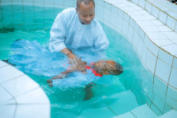
Short
answer...YES!
All
Christians—those
who
have
decided
to
place
their
faith
in
Jesus—the
Son
of
God
who
offered
His
body
on
the
cross
as
a
sacrifice
for
our
sins
so
that
we
may
be
forgiven—should
be baptized.
Jesus
declared,
“Go
therefore
and
make
disciples
of
all
the
nations,
baptizing
them
in
the
name
of
the
Father and of the Son and of the Holy Spirit.”
Matthew 28:19
However, it is important to understand the following...baptism:
•
Does
not
provide
salvation.
Salvation
occurs
because
of
our
faith
and
not
baptism.
“For
by
grace
you
have
been
saved
through
faith,
and
that
not
of
yourselves;
it
is
the
gift
of
God,
not
of
works,
lest
anyone should boast.”
Ephesians 2:8-9
•
Represents:
o
An act of obedience.
o
The death, burial, and resurrection of Jesus.
o
An illustrative testimony of the changes that have occurred within:
▪
Submersion under water demonstrates our death (and burial) to sin.
▪
Rising up from the water represents our new (and resurrected) life in Jesus.
•
“Buried
with
Him
in
baptism,
in
which
you
also
were
raised
with
Him
through
faith
in
the
working
of
God,
who
raised
Him
from
the
dead.
And
you,
being
dead
in
your
trespasses
and
the
uncircumcision
of
your
flesh,
He
has
made
alive
together
with
Him,
having
forgiven
you
all
trespasses,
having
wiped
out
the
handwriting
of
requirements
that
was
against
us,
which
was
contrary
to
us.
And
He
has
taken
it
out
of
the
way,
having
nailed
it
to
the
cross.”
Colossians 2:12-14
•
“Therefore
we
were
buried
with
Him
through
baptism
into
death,
that
just
as
Christ
was
raised
from
the
dead
by
the
glory
of
the
Father,
even
so
we
also
should
walk
in
newness
of
life.”
Romans 6:4
Here are additional aspects of baptism:
•
Baptism is a public demonstration of the believer’s faith and desires of their heart.
•
It
should
occur
when
someone
has
reached
a
degree
of
spiritual
maturity
and
enlightenment
where
they are able to articulate:
o
Their understanding that they are sinful.
o
They
are
forgiven
for
their
sins
because
of
God’s
grace
and
their
faith
in
what
Jesus
had
done
for
them on the cross.
•
It should occur one time:
o
After one accepts Jesus as their Savior and Lord.
o
By
full
immersion
under
water
(bathtub,
lake,
ocean,
river,
po
ol,
etc.).
▪
The
Greek
word
for
baptism
is
“baptizo.”
Baptizo
means
to
immerse, submerge, or fully wet.
▪
Sprinkling
of
water
on
the
head
or
body
lacks
the
spiritual
significance
and
representation
of
death
and
burial
because
of sin, and a resurrected new life.
Here is a link to a video on Baptism: (
https://www.gotquestions.org/Christian-baptism.html
)
The Baptism of Jesus
Jesus
was
a
mirror
image
of
God’s
character.
He
exemplified
God’s
truth,
God’s
grace
and
God’s
love;
He
lived
a
life
that
was
an
example
of
God’s
definition
of
righteous
behavior;
and
He
demonstrated
what He taught—including being baptized.
John
the
Baptist
was
baptizing
persons
at
the
Jordan
river.
John
was
preparing
the
way
for
Jesus
by
declaring
the
imminent
arrival
of
the
Messiah,
and
the
need
to
repent
and
be
baptized
(as
a
public
demonstration of their willing heart to repent from their sins and turn towards God).
“In
those
days
John
the
Baptist
came
preaching
in
the
wilderness
of
Judea,
and
saying,
‘Repent,
for
the
kingdom
of
heaven
is
at
hand!’
For
this
is
he
who
was
spoken
of
by
the
prophet
Isaiah,
saying:
‘The
voice
of
one
crying
in
the
wilderness:
Prepare
the
way
of
the
Lord;
Make
His
paths
straight.’”
Matthew 3:1-3
John
also
made
prophetic
declarations
about
the
divine
nature
of
Jesus,
His
ministry,
and
what
will
occur during the final judgment. (
Mat. 13:24-30; Rev. 20:11-15
)
“I
indeed
baptize
you
with
water
unto
repentance,
but
He
who
is
coming
after
me
is
mightier
than
I,
whose
sandals
I
am
not
worthy
to
carry.
He
will
baptize
you
with
the
Holy
Spirit
and
fire.
His
winnowing
fan
is
in
His
hand,
and
He
will
thoroughly
clean
out
His
threshing
floor,
and
gather
His
wheat
into the barn; but He will burn up the chaff with unquenchable fire.”
Matthew 3:11-12
Jesus
travelled
to
the
Jordan
river
to
be
baptized
by
John.
“Then
Jesus
came
from
Galilee
to
John
at
the
Jordan
to
be
baptized
by
him.
And
John
tried
to
prevent
Him,
saying,
‘I
need
to
be
baptized
by
You,
and
are
You
coming
to
me?’
But
Jesus
answered
and
said
to
him,
‘Permit
it
to
be
so
now,
for
thus
it
is
fitting for us to fulfill all righteousness.’
Then he allowed Him.”
Mat. 3:13-15
The baptism of Jesus fulfilled righteousness by demonstrating:
•
Even though He was sinless and did not need to repent, He wanted to be baptized:
o
As a means to demonstrate His humanity.
o
As an example for those who believe in Him.
•
An example of His impending death and resurrection.
•
A confirmation that He is the Messiah by what occurred after He rose from the water.
“When
He
had
been
baptized,
Jesus
came
up
immediately
from
the
water;
and
behold,
the
heavens
were
opened
to
Him,
and
He
saw
the
Spirit
of
God
descending
like
a
dove
and
alighting
upon
Him.
And
suddenly
a
voice
came
from
heaven,
saying,
‘This
is
My
beloved
Son,
in
whom
I
am
well
pleased.’”
Matthew 3:16-17
The
baptism
of
Jesus
is
recorded
in
all
four
gospels:
(
Mat.
3:13-17;
Mark
1:2-11;
Luke
3:21-23;
John
1:29-34
). Thereafter is when Jesus began His public ministry.
Here is link to a video on the baptism of Jesus: (
https://www.youtube.com/shorts/yOq6GkRRPao
).
How A Baptism Should Occur
A
baptism
is
a
positive,
wonderful
and
loving
event.
As
such,
if
possible,
it
is
beneficial
to
have
family,
friends
and
Christian
brothers
and
sisters
attend
to
witness
the
baptism.
In
addition,
the
baptism
should
occur
in
any
clean
and
safe
body
of
water—including
a
pool,
stream,
lake,
ocean,
bathtub—or
any
means
possible
where
the
baptized
may
be
fully
immersed.
In
addition,
the
baptizer
must
be
a
Christian (preferably the pastor or elder within the church).
Preparation
•
The
baptizer
should
pre-instruct
the
baptized
of
what
will
occur.
For
example,
the
baptized
will
need
to
close
their
mouth
and
use
their
thumb
and
index
finger
to
close
their
nostrils.
When
ready,
the
baptizer
will
place
one
hand
behind
their
head
and
another
hand
to
hold
their
arm
or
wrist.
The
baptized
should
relax
and
fall
backward
into
the
water.
Once
fully
submerged,
the
baptizer
will
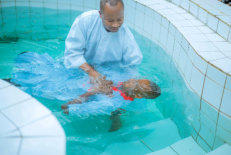
immediately raise their head out of the water and assist them upward until standing.
•
Clothing
will
become
wet
and
possibly
transparent.
As
such,
the
baptized
should
wear
dark
clothing
to
not
reveal
inappropriate
under
garments
or
“private
areas”
of
their
body.
Plus
bring
dry
clothes
to
change into.
•
Ask
the
baptized
if
they
would
like
to
make
a
public
profession
of
their
faith
and
reason
for
their
baptism.
Suggestion of What the Baptizer May Say
It
is
appropriate
for
the
baptizer
to
introduce
the
one
being
baptized
to
those
who
are
witnessing
the
baptism. An introduction may include:
•
Their personal knowledge of this person.
•
How they have witnessed their transformation.
•
Additional relevant background information if appropriate.
•
Then, if agreed upon, ask the one who will be baptized if they would like to speak.
What the Baptizer Should Say (prior to the baptism)
•
Because
of
your
declared
faith,
I
baptize
you
“In
the
name
of
the
Father
and
of
the
Son
and
of
the
Holy Spirit.”
Matthew 28:19
•
Important
Note:
Baptism
should
be
a
joyful
experience
and
not
a
ritual.
Except
for
baptizing
“In
the
name
of
the
Father
and
of
the
Son
and
of
the
Holy
Spirit,”
other
words
that
are
spoken
should
not
follow
any
prescribed
format.
It
is
about
the
intent
of
our
heart;
it
is
about
our
faith;
it
is
about
worship;
it
is
about
obedience;
and
it
is
about
our
love
for
God.
While
it
is
beneficial
to
have
order
and
structure,
our
acts
of
worship
and
obedience
should
flow
freely
from
our
heart
and
not
defined
by
a
specific
sequence
of
ritualistic
words
and
behaviors.
Rituals
can
stifle
the
spirit
and
harden
the
heart
towards
the
true
meaning
and
purpose
of
our
worship
and
obedience
to
God.
Therefore,
whenever possible, make
this a personal, joyous and special occasion for all.
I pray this lesson fully explains the spiritual importance and meaning of baptism.
All for His Glory!
Harold D. Thomas
Thought-Provoking Questions
The
purpose
of
the
questions
is
to
facilitate
a
deeper
understanding
of
the
Bible,
this
Bible
study
topic,
and
ourselves.
The
questions
may
be
answered
by
each
reader,
or
used
by
a
Bible
study
group
leader,
or
church
pastor.
The
questions
should
be
answered
or
discussed
after
reading
the
lesson.
In
addition,
the
questions
are
designed
to
enhance
learning
via
the
determination
of
personal
opinions
and
discovering
how
the
lesson
content
relates
to
our
personal
lives.
As
such,
no
answers
are
provided.
Questions
Has this lesson changed any aspect of your understanding of baptism? If yes, explain.
What is the most important thing you learned about baptism?
How would you explain the spiritual relevance of immersion under water?
How would you explain the spiritual relevance of rising out of the water?
The
intent
of
the
baptism
of
Jesus
was
to
fulfill
righteousness.
Different
fulfillment
of
righteousness
were listed in the lesson. Which do you think is most important to you?
The
lesson
states
baptism
is
a
public
demonstration
of
the
believer’s
faith
and
desires
of
their
heart.
Do you think this statement is accurate, or can it be improved by modifying the words?
The
lesson
states
the
baptized
should
have
reached
a
degree
of
spiritual
maturity
and
enlightenment
that
is
evidenced
by
their
ability
to
articulate
they
are
sinful
and
are
forgiven
by
their
faith
in
Jesus.
Why is this important?
The
lesson
concludes
by
stating
that
it
is
beneficial
for
baptisms
to
have
order
and
structure.
However,
our
worship
and
obedience
should
joyfully
flow
from
our
heart,
and
not
be
constrained
by
the
consequences of rituals. Do you agree or disagree?
How
would
you
explain
the
relevance
and
importance
of
baptism
to
someone
who
has
recently
accepted Jesus Christ as their Savior and Lord?
You may d
ownload a PDF version of the questions by clicking this button.






The words of Jesus Christ are in red text.
Hyperlinks = (XXXX…)









Words of Jesus are in red text.
Hyperlinks = (XXXX…)
Short
answer...YES!
All
Christians—those
who
have
decided
to
place
their
faith
in
Jesus—the
Son
of
God
who
offered
His
body
on
the
cross
as
a
sacrifice
for
our
sins so that we may be forgiven—should be baptized.
Jesus
declared,
“Go
therefore
and
make
disciples
of
all
the
nations,
baptizing
them
in
the
name
of
the
Father
and
of the Son and of the Holy Spirit.”
Matthew 28:19
However,
it
is
important
to
understand
the
following...baptism:
•
Does
not
provide
salvation.
Salvation
occurs
because
of
our
faith
and
not
baptism.
“For
by
grace
you
have
been
saved
through
faith,
and
that
not
of
yourselves;
it
is
the
gift
of
God,
not
of
works,
lest
anyone should boast.”
Ephesians 2:8-9
•
Represents:
o
An act of obedience.
o
The death, burial, and resurrection of Jesus.
o
An
illustrative
testimony
of
the
changes
that
have
occurred within:
▪
Submersion
under
water
demonstrates
our
death (and burial) to sin.
▪
Rising
up
from
the
water
represents
our
new
(and resurrected) life in Jesus.
•
“Buried
with
Him
in
baptism,
in
which
you
also
were
raised
with
Him
through
faith
in
the
working
of
God,
who
raised
Him
from
the
dead.
And
you,
being
dead
in
your
trespasses
and
the
uncircumcision
of
your
flesh,
He
has
made
alive
together
with
Him,
having
forgiven
you
all
trespasses,
having
wiped
out
the
handwriting
of
requirements
that
was
against
us,
which
was
contrary
to
us.
And
He
has
taken
it
out
of
the
way,
having
nailed it to the cross.”
Colossians 2:12-14
•
“Therefore
we
were
buried
with
Him
through
baptism
into
death,
that
just
as
Christ
was
raised
from
the
dead
by
the
glory
of
the
Father,
even
so
we
also
should
walk
in
newness of life.”
Romans 6:4
Here are additional aspects of baptism:
•
Baptism
is
a
public
demonstration
of
the
believer’s
faith and desires of their heart.
•
It
should
occur
when
someone
has
reached
a
degree
of
spiritual
maturity
and
enlightenment
where
they
are
able to articulate:
o
Their understanding that they are sinful.
o
They
are
forgiven
for
their
sins
because
of
God’s
grace
and
their
faith
in
what
Jesus
had
done
for
them on the cross.
•
It should occur one time:
o
After
one
accepts
Jesus
as
thei
r Savior and Lord.
o
By
full
immersion
under
water
(bathtub,
lake,
ocean,
river, pool, etc.).
▪
The
Greek
word
for
baptism
is
“baptizo.”
Baptizo
means
to
immerse,
submerge,
or
fully
wet.
▪
Sprinkling
of
water
on
the
head
or
body
lacks
the
spiritual
significance
and
representation
of
death
and
burial
because
of
sin,
and
a
resurrected
new
life.
Here is a link to a video on Baptism:
(https://www.gotquestions.org/Christian-baptism.html)
The Baptism of Jesus
Jesus
was
a
mirror
image
of
God’s
character.
He
exemplified
God’s
truth,
God’s
grace
and
God’s
love;
He
lived
a
life
that
was
an
example
of
God’s
definition
of
righteous
behavior;
and
He
demonstrated
what
He
taught—including being baptized.
John
the
Baptist
was
baptizing
persons
at
the
Jordan
river.
John
was
preparing
the
way
for
Jesus
by
declaring
the
imminent
arrival
of
the
Messiah,
and
the
need
to
repent
and
be
baptized
(as
a
public
demonstration
of
their
willing
heart
to
repent
from
their
sins
and
turn
towards God).
“In
those
days
John
the
Baptist
came
preaching
in
the
wilderness
of
Judea,
and
saying,
‘Repent,
for
the
kingdom
of
heaven
is
at
hand!’
For
this
is
he
who
was
spoken
of
by
the
prophet
Isaiah,
saying:
‘The
voice
of
one
crying
in
the
wilderness:
Prepare
the
way
of
the
Lord; Make His paths straight.’”
Matthew 3:1-3
John
also
made
prophetic
declarations
about
the
divine
nature
of
Jesus,
His
ministry,
and
what
will
occur
during
the final judgment. (
Mat. 13:24-30; Rev. 20:11-15
)
“I
indeed
baptize
you
with
water
unto
repentance,
but
He
who
is
coming
after
me
is
mightier
than
I,
whose
sandals
I
am
not
worthy
to
carry.
He
will
baptize
you
with
the
Holy
Spirit
and
fire.
His
winnowing
fan
is
in
His
hand,
and
He
will
thoroughly
clean
out
His
threshing
floor,
and
gather
His
wheat
into
the
barn;
but
He
will
burn
up
the
chaff with unquenchable fire.”
Matthew 3:11-12
Jesus
travelled
to
the
Jordan
river
to
be
baptized
by
John.
“Then
Jesus
came
from
Galilee
to
John
at
the
Jordan
to
be
baptized
by
him.
And
John
tried
to
prevent
Him,
saying,
‘I
need
to
be
baptized
by
You,
and
are
You
coming
to
me?’
But
Jesus
answered
and
said
to
him,
‘Permit
it
to
be
so
now,
for
thus
it
is
fitting
for
us
to
fulfill
all righteousness.’
Then he allowed Him.”
Mat. 3:13-15
The
baptism
of
Jesus
fulfilled
righteousness
by
demonstrating:
•
Even
though
He
was
sinless
and
did
not
need
to
repent, He wanted to be baptized:
o
As a means to demonstrate His humanity.
o
As an example for those who believe in Him.
•
An example of His impending death and resurrection.
•
A
confirmation
that
He
is
the
Messiah
by
what
occurred after He rose from the water.
“When
He
had
been
baptized,
Jesus
came
up
immediately
from
the
water;
and
behold,
the
heavens
were
opened
to
Him,
and
He
saw
the
Spirit
of
God
descending
like
a
dove
and
alighting
upon
Him.
And
suddenly
a
voice
came
from
heaven,
saying,
‘This
is
My
beloved
Son,
in
whom
I
am
well
pleased.’”
Matthew
3:16-17
The
baptism
of
Jesus
is
recorded
in
all
four
gospels:
(
Mat.
3:13-17;
Mark
1:2-11;
Luke
3:21-23;
John
1:29-34
).
Thereafter is when Jesus began His public ministry.
Here
is
link
to
a
video
on
the
baptism
of
Jesus:
(
https://www.youtube.com/shorts/yOq6GkRRPao
).
How A Baptism Should Occur
A
baptism
is
a
positive,
wonderful
and
loving
event.
As
such,
if
possible,
it
is
beneficial
to
have
family,
friends
and
Christian
brothers
and
sisters
attend
to
witness
the
baptism.
In
addition,
the
baptism
should
occur
in
any
clean
and
safe
body
of
water—including
a
pool,
stream,
lake,
ocean,
bathtub—or
any
means
possible
where
the
baptized
may
be
fully
immersed.
In
addition,
the
baptizer
must
be
a
Christian
(preferably
the
pastor
or
elder
within
the church).
Preparation
•
The
baptizer
should
pre-instruct
the
baptized
of
what
will
occur.
For
example,
the
baptized
will
need
to
close
their
mouth
and
use
their
thumb
and
index
finger
to
close
their
nostrils.
When
ready,
the
baptizer
will
place
one
hand
behind
their
head
and
another
hand
to
hold
their
arm
or
wrist.
The
baptized
should
relax
and
fall
backward
into
the
water.
Once
fully
submerged,
the
baptizer
will
immediately
raise
their
head
out
of
the
water
and
assist
them
upward
until
standing.
•
Clothing
will
become
wet
and
possibly
transparent.
As
such,
the
baptized
should
wear
dark
clothing
to
not
reveal
inappropriate
under
garments
or
“private
areas”
of their body. Plus bring dry clothes to change into.
•
Ask
the
baptized
if
they
would
like
to
make
a
public
profession of their faith and reason for their baptism.
Suggestion of What the Baptizer May Say
It
is
appropriate
for
the
baptizer
to
introduce
the
one
being
baptized
to
those
who
are
witnessing
the
baptism.
An introduction may include:
•
Their personal knowledge of this person.
•
How they have witnessed their transformation.
•
Additional
relevant
background
information
if
appropriate.
•
Then,
if
agreed
upon,
ask
the
one
who
will
be
baptized if they would like to speak.
What the Baptizer Should Say (prior to the baptism)
•
Because
of
your
declared
faith,
I
baptize
you
“In
the
name
of
the
Father
and
of
the
Son
and
of
the
Holy
Spirit.”
Matthew 28:19
•
Important
Note:
Baptism
should
be
a
joyful
experience
and
not
a
ritual.
Except
for
baptizing
“In
the
name
of
the
Father
and
of
the
Son
and
of
the
Holy
Spirit,”
other
words
that
are
spoken
should
not
follow
any
prescribed
format.
It
is
about
the
intent
of
our
heart;
it
is
about
our
faith;
it
is
about
worship;
it
is
about
obedience;
and
it
is
about
our
love
for
God.
While
it
is
beneficial
to
have
order
and
structure,
our
acts
of
worship
and
obedience
should
flow
freely
from
our
heart
and
not
defined
by
a
specific
sequence
of
ritualistic
words
and
behaviors.
Rituals
can
stifle
the
spirit
and
harden
the
heart
towards
the
true
meaning
and
purpose
of
our
worship
and
obedience
to
God.
Therefore,
whenever
possible,
make
this
a
personal,
joyou
s and special occasion for all.
I
pray
this
lesson
fully
explains
the
spiritual
importance
and meaning of baptism.
All for His Glory!
Harold D. Thomas
Thought-Provoking Questions
The
purpose
of
the
questions
is
to
facilitate
a
deeper
understanding
of
the
Bible,
this
Bible
study
topic,
and
ourselves.
The
questions
may
be
answered
by
each
reader,
or
used
by
a
Bible
study
group
leader,
or
church
pastor.
The
questions
should
be
answered
or
discussed
after
reading
the
lesson.
In
addition,
the
questions
are
designed
to
enhance
learning
via
the
determination
of
personal
opinions
and
discovering
how
the
lesson
content
relates
to
our
personal
lives.
As
such,
no
answers are provided.
Questions
Has
this
lesson
changed
any
aspect
of
your
understanding of baptism? If yes, explain.
What
is
the
most
important
thing
you
learned
about
baptism?
How
would
you
explain
the
spiritual
relevance
of
immersion under water?
How
would
you
explain
the
spiritual
relevance
of
rising
out of the water?
The
intent
of
the
baptism
of
Jesus
was
to
fulfill
righteousness.
Different
fulfillment
of
righteousness
were
listed
in
the
lesson.
Which
do
you
think
is
most
important
to you?
The
lesson
states
baptism
is
a
public
demonstration
of
the
believer’s
faith
and
desires
of
their
heart.
Do
you
think
this
statement
is
accurate,
or
can
it
be
improved
by
modifying the words?
The
lesson
states
the
baptized
should
have
reached
a
degree
of
spiritual
maturity
and
enlightenment
that
is
evidenced
by
their
ability
to
articulate
they
are
sinful
and
are
forgiven
by
their
faith
in
Jesus.
Why
is
this
important?
The
lesson
concludes
by
stating
that
it
is
beneficial
for
baptisms
to
have
order
and
structure.
However,
our
worship
and
obedience
should
joyfully
flow
from
our
heart,
and
not
be
constrained
by
the
consequences
of
rituals. Do you agree or disagree?
How
would
you
explain
the
relevance
and
importance
of
baptism
to
someone
who
has
recently
accepted
Jesus
Christ as their Savior and Lord?
You
may
download
a
PDF
version
of
the
questions
by
clicking this button.