Introduction
A
religion
is
commonly
defined
as
a
set
of
beliefs,
ceremonial
rituals,
and
moral
codes
of
behavior
that
are shared by the members of the religion. In addition, a religion often:
•
Centers on following established practices and rules.
•
Causes
a
person
to
believe
they
must
comply
with
the
prescribed
behavior
to
please
God
or
to
avoid punishment.
•
Leads
to
legalism—where
adherence
to
rules
outweighs
faith—which
can
harden
the
heart
and
stifle transformation into righteousness.
•
Fails to reveal the loving and graceful heart of God.
From
a
Christian
and
spiritual
context,
a
relationship
is
comprised
of
a
personal
and
intimate
connection
with
God
that
transcends
religious
doctrine,
ceremonial
rituals
and
codes
of
behavior.
In
addition, a relationship:
•
Conveys
a
willing
interaction
with
God
out
of
gratitude
rather
than
religious
obligation
or
rules
compliance.
•
Opens
our
innermost
being
to
experience
the
loving
and
graceful
heart
of
God—which
changes
our
heart’s desire to obey and repent from sin as an expression of our love towards Him.
•
Facilitates validation of His existence and transformation into righteousness.
God
is
more
interested
in
the
desires
of
our
heart
than
He
is
with
our
religious
activity.
“For
the
Lord
does
not
see
as
man
sees;
for
man
looks
at
the
outward
appearance,
but
the
Lord
looks
at
the
heart.”
1 Samuel 16:7
“I, the Lord, search the heart, I test the min
d.”
Jeremiah 17:10
Besides,
because
of
our
sinful
nature
we
will
never
achieve
a
level
of
behavior
that
is
“above
a
minimal
standard”
God
will
accept.
There
is
only
one
person
who
transcended
this
standard...Jesus
Christ...whom
God
crucified
on
the
cross
as
a
sacrifice
for
our
sins...to
make
up
the
difference
(
as
a
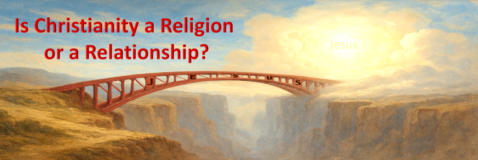
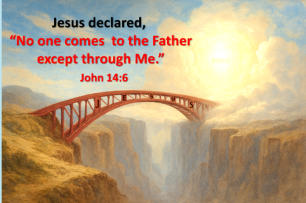
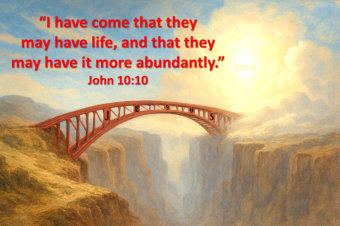
bridge
)
between
who
we
are
and
our
inabilities
to
achieve
what
He
desires...so
that
we
may
be
forgiven
(by
our
faith
in Jesus) and develop a relationship with God.
•
“For
by
grace
you
have
been
saved
through
faith,
and
that
not
of
yourselves;
it
is
the
gift
of
God,
not
of
works,
lest
anyone
should
boast.
For
we
are
His
workmanship,
created
in
Christ
Jesus
for
good
works,
which God prepared beforehand that we should walk in them.”
Ephesians 2:8-9
•
“Whoever
believes
in
Him
should
not
perish
but
have
eternal
life.
For
God
so
loved
the
world
that
He
gave
His
only
begotten
Son,
that
whoever
believes
in
Him
should
not
perish
but
have
everlasting life.”
John 3:15-16
•
“For
He
made
Him
who
knew
no
sin
to
be
sin
for
us,
that
we
might
become
the
righteousness
of
God in Him.”
2 Corinthians 5:21
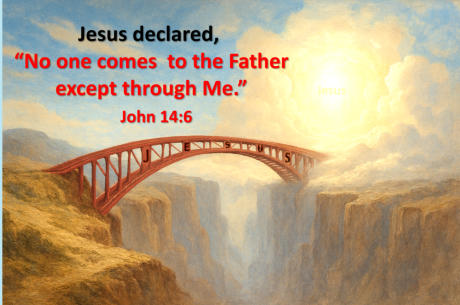
God
reached
out
to
mankind
by
building
a
“bridge”
of
forgiveness
and
a
means
to
develop
a
relationship
with
Him.
“In
this
the
love
of
God
was
manifested
toward
us,
that
God
has
sent
His
only
begotten
Son
into
the
world,
that
we
might
live
through
Him.
In
this
is
love,
not
that
we
loved
God,
but
that He loved us and sent His Son to be the propitiation for our sins.”
1 John 4:9-10
The
purpose
of
this
lesson
is
to
enhance
your
spiritual
understanding
that
God
desires
an
intimate,
personal
and
loving
relationship—and
not
someone
who
“checks
off
all
the
religious
boxes”
in
an
attempt
to
earn
His
approval.
But
more
important,
the
objective
of
this
lesson
is
to
facilitate
an
evaluation
and
enhancement
of
your
relationship
with
God.
For
it
is
safe
to
say
that
all
of
us
have
room
for improvement.
God’s Eternal Plan
Have
you
ever
read
a
book
and
skipped
to
the
last
pages
to
find
out
what
happens
at
the
end?
When
you
know
the
final
outcome,
the
relevance
and
importance
of
things
that
occur
in
the
book
become
more
evident
(and
helps
to
“tie”
everything
together).
The
same
is
true
with
the
Bible.
The
last
2
chapters
in
the
Bible
(
Revelation
chapters
21
and
22
)
reveals
God’s
eternal
plan:
to
dwell
amongst
and
love
upon
those
who
love
Him.
All
that
has
occurred
in
the
past,
all
that
is
occurring
today,
and
all
that
will
occur
in
the
future
is
all
part
of
God’s
plan
to
fulfill
His
desire
to
intimately
express
His
love
towards
those
who
believe
in
Him,
those
who
have
faith
in
Him,
those
who
trust
Him,
those
who
obey
Him...and
most of all...those who love Him.
The
reality
of
God’s
eternal
plan
becomes
clear
when
we
consider
what
God
revealed
to
John
about
the
future
in
Revelation
21:1-4.
“Now
I
saw
a
new
heaven
and
a
new
earth,
for
the
first
heaven
and
the
first
earth
had
passed
away.
Also
there
was
no
more
sea.
Then
I,
John,
saw
the
holy
city,
New
Jerusalem,
coming
down
out
of
heaven
from
God,
prepared
as
a
bride
adorned
for
her
husband.
And
I
heard
a
loud
voice
from
heaven
saying,
‘Behold,
the
tabernacle
of
God
is
with
men,
and
He
will
dwell
with
them,
and
they
shall
be
His
people.
God
Himself
will
be
with
them
and
be
their
God.
And
God
will
wipe
away
every
tear
from
their
eyes;
there
shall
be
no
more
death,
nor
sorrow,
nor
crying.
There
shall
be no more pain, for the former things have passed away.’”
Deeply
consider
the
following...God
will
cause
the
present
Heaven
and
Earth
to
“pass
away”
(no
longer
exist),
and
will
be
replaced
with
a
new
Heaven
and
a
new
Earth—all
because
of
God’s
desire
to
dwell
amongst
and
love
upon
those
who
love
Him.
When
you
fully
grasp
this
truth
it
will
transform
your
perception of God.
When
asked
which
is
the
greatest
commandment,
Jesus
replied,
“You
shall
love
the
Lord
your
God
with
all
your
heart,
with
all
your
soul,
and
with
all
your
mind.
This
is
the
first
and
great
commandment.
And
the
second
is
like
it:
You
shall
love
your
neighbor
as
yourself.
On
these
two
commandments
hang
all
the Law and the Prophets.”
Matthew 22:37-40
For those who desire to know and love God:
•
“You will seek Me and find Me, when you search for Me with all your heart.”
Jeremiah 29:13
•
“I love those who love me, and those who seek me diligently will find me.”
Proverbs 8:17
To
gain
an
insight
of
who
God
is...we
can
simply
look
inside
ourselves...because
we
are
made
in
His
image.
“Then
God
said,
‘Let
Us
make
man
in
Our
image,
according
to
Our
likeness’...So
God
created
man
in
His
own
image;
in
the
image
of
God
He
created
him;
male
and
female
He
created
them.”
Genesis 1:26-27
To
facilitate
His
eternal
plan,
God
designed
within
us
with
critical
attributes:
(1)
an
inherent
need
to
love
and be loved, and (2) an inherent need to develop relationships with others.
We Need to Love and Be Loved
Both
sides
of
the
love
equation—our
need
to
be
loved
and
to
love
others—play
a
vital
role
in
fulfilling
our
emotional
well-being
and
overall
happiness.
Our
need
for
reciprocal
love
includes
our
spouse,
but
also encompasses our relationships with family members and friends.
Consider
how
you
feel
on
the
inside
when
you
meaningfully
hug
someone
who
meaningfully
hugs
you.
There
is
a
fleeting
moment
of
an
indescribable
feeling
of
elation
as
each
person’s
soul
connects
spiritually. What’s more, anxieties and daily issues seem to disappear during the embrace.
Our
innate
need
to
be
loved
begins
during
infancy.
For
example,
there
are
numerous
studies
on
the
significant
physical
ill-effects
upon
infants
caused
by
deprivation
of
maternal
care—which
continue
on
later in life in the form of severe emotional and psychiatric problems. Sources:
•
(
https://drdavidhamilton.com/why-children-need-love-to-grow/
)
•
(
https://www.apa.org/monitor/2014/06/neglect
)
As
a
child
grows,
the
human
need
for
parental
love
continues
because
it
shapes
multiple
aspects
of
our
persona—including
our
emotional
stability,
self-confidence,
interpersonal
skills,
and
an
improved
ability
to manage difficult situations in life. Sources:
•
(
https://www.thehealthychildco.com/blog/the-science-behind-love-and-child-development
)
•
(
https://ejsit-journal.com/index.php/ejsit/article/view/672/614
)
As
a
child
transitions
from
early
youth
into
adolescence
and
adulthood,
the
need
to
develop
relationships
and
loving
others
becomes
increasingly
important—and
is
essential
for
emotional
and
mental well-being, and in developing healthy relationships. Sources:
•
(
https://pmc.ncbi.nlm.nih.gov/articles/PMC7416486/
)
•
(
https://academic.oup.com/psychsocgerontology/article/76/2/391/5943916
)
•
(
h
t
t
p
s
:
/
/
m
e
d
i
u
m
.
c
o
m
/
@
p
e
r
v
e
e
n
z
a
h
i
d
a
8
9
5
/
t
h
e
-
p
o
w
e
r
-
o
f
-
m
u
t
u
a
l
-
a
f
f
e
c
t
i
o
n
-
w
h
y
-
r
e
c
i
p
r
o
c
i
t
y
-
m
a
t
t
e
r
s
-
i
n
-
love-729ded8181a7
)
4 Different Types of Love: Agape, Phileo, Eros, and Storge
Love
is
an
emotion
that
may
be
simply
described
as
an
internal
feeling
of
connection,
warmth,
and
compassion
towards
another
person.
In
addition,
it
is
possible
to
identify
4
different
types
of
love
that
we
experience
with
others.
Each
one
is
important
because
they
facilitate
our
emotional
and
social
well-
being. As you read, determine if you have experienced each type of love with someone.
•
Storge
refers
to
the
affection
within
families,
such
as
the
bond
between
parents
and
children,
among siblings, and with close family friends. (
Romans 12:10; Eph. 4:2; 1 Peter 4:8; Gal. 5:13
)
•
Phileo
is
the
type
of
love
that
exists
between
friends.
It
is
characterized
by
mutual
respect,
trust,
and
companionship
where
individuals
share
common
interests,
values
and
experiences.
(
John
11:35-36; 21:15-17; 1 Sam. 18:1-3
)
•
Eros
conveys
a
marital
love
characterized
by
physical
and
emotional
intimacy.
(
Eph.
5:25;
Gen.
2:24; Proverbs 5:18-19; Mat. 19:6
)
•
Agape
is
considered
the
highest
form
of
love
because
it
is
unconditional,
occurs
without
expecting
anything
in
return,
and
is
based
upon
a
core
desire
for
the
selfless
well-being
of
others.
(
John
3:16,
15:13; 1 Cor. 13:4-7; Rom. 5:8
)
Agape
love
is
unlike
storge,
phileo
and
eros.
Agape
love
is
not
innate
and
is
not
naturally
expressed
by
humans
because
of
(1)
our
sinful
nature,
and
(2)
because
the
source
of
agape
is
God.
It
is
only
through
the
sanctification
(cleansing)
process—driven
by
the
Holy
Spirit—that
we
are
transformed
into
a vessel that God can use to express His agape love with others.
For
more
information
read
“8
Steps
to
Spiritual
Maturity”
on
UniqueBibleStudies.com.
This
lesson
will
provide
you
with
a
greater
insight
into
yourself,
and
an
improved
understanding
of
your
stage
within
the
sanctification process.
We Need Relationships With Others
We
humans
are
social
beings
because
God
designed
us
with
an
innate
need
for
relationships.
Medical
studies
have
identified
how
human
interaction
positively
affects
our
brain
chemistry,
cognitive
development
and
physical
health.
Studies
have
also
identified
the
negative
consequences
of
social
deprivation. Sources:
•
(
https://pmc.ncbi.nlm.nih.gov/articles/PMC2527715/
)
•
(
https://biologyinsights.com/why-man-is-a-social-animal-and-needs-connection/
)
•
(
https://psychology.tips/love-and-belonging-needs/
)
•
(
https://www.apa.org/monitor/2023/06/cover-story-science-friendship
)
God
also
designed
this
behavioral
attribute
within
the
animal
kingdom.
Our
need
for
social
interaction
i
s evidenced by considering our own needs and actions, and by watching human and animal behavior.
The
human
need
for
interpersonal
relationships
involves
much
more
than
survival
in
the
animal
kingdom—because
our
need
for
others
foundationally
supports
God’s
desire
for
each
of
us
to
seek
and
love Him, and to love one another.
Satan’s Eternal Objective
Satan’s
desire
is
to
circumvent
God’s
eternal
plan
by
using
lies
that
redirect
persons
from
placing
their
faith
in
Jesus
Christ,
lies
that
magnify
the
darkness
of
sin
to
restrict
spiritual
sight
that
is
enabled
by
the
light
of
Jesus,
and
by
using
lies
to
create
conflicts
that
destroy
relationships.
Jesus
declared
regarding
Satan:
•
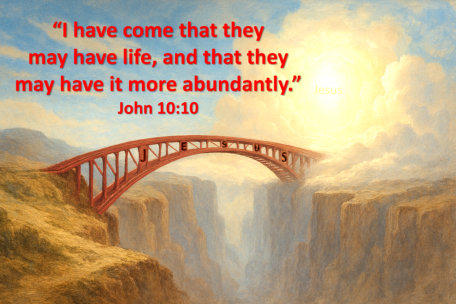
“The thief does not come except to steal, and to kill, and to destroy.”
John 10:10
•
“He
was
a
murderer
from
the
beginning,
and
does
not
stand
in
the
truth,
because
there
is
no
truth
in
him.
When
he
speaks
a
lie,
he
speaks
from
his
own
resources,
for
he
is
a
liar
and
the
father
of
it.”
John 8:44
Satan
cannot
force
someone
to
sin
because
God
has
designed
us
a
free
will.
Therefore,
Satan’s
method
of
operation
is
to
steal,
kill
and
destroy
by
using
lies
that
deceive
and
draw
someone
into
darkness, willful sinning, and separation from God.
Here
is
a
truth
that
will
help
to
open
your
spiritual
eyes:
All
wars,
all
battles,
all
skirmishes,
all
arguments, all divorces, all destroyed lives, and all sin...began as a lie.
“For
we
do
not
wrestle
against
flesh
and
blood,
but
against
principalities,
against
powers,
against
the
rulers
of
the
darkness
of
this
age,
against
spiritual
hosts
of
wickedness
in
the
heavenly
places.”
Ephesians 6:12
We
all
have
varying
degrees
of
traumatic
scars
(caused
by
the
consequences
of
our
sin
and
by
the
sin
of
others)
that
have
grown
over
wounds
within
our
soul.
These
scars
influence
our
persona
as
restrictive
barriers,
defensive
mechanisms,
and
protective
shields
that
cons
tricts
our
ability to love and personally connect with others.
A
worst-case
and
most
extreme
example
of
how
Satan’s
lies
can
cause
traumatic
wounds
that
affect
our
behavior
is
the
“thousand-yard
stare”
that
occurs
within
military
personnel
who
have
experienced
the
psychological
impact
of
war.
The
invisible
injury
to
their
heart
and
soul
is
evidenced
by
a
dissociation and emotional detachment from their environment.
We
are
all
victims
of
Satan’s
lies
and
have
suffered
the
consequences
of
our
willful
disobedience.
God’s
grace
and
His
love
is
the
only
means
to
overcome
the
consequential
damage
caused
by
our
sin
and
by
the
sin
of
others.
It
is
only
through
faith
in
the
sacrificial
death
of
His
Son,
Jesus,
we
are
forgiven
and
are
able
to
be
healed
from
the
scars
that
distort
our
perception
of
ourselves
and
those
around
us.
In
addition,
because
we
are
forgiven
we
have
a
justified
reason
to
forgive
others.
For
how
can we judge and not forgive someone for the very thing we were once guilty of committing.
•
“As Christ forgave you, so you also must do.”
Colossians 3:13
•
“Be
kind
to
one
another,
tenderhearted,
forgiving
one
another,
even
as
God
in
Christ
forgave
you.”
Ephesians 4:32
God’s
forgiveness
is
more
powerful
than
we
realize...because
His
grace
and
love
operates
within
the
spiritual
realm,
heals
the
painful
scars
within
our
heart
and
soul,
and
radically
transforms
how
we
perceive and relate to others.
For more information on forgiveness read “The Power of Forgiveness” on UniqueBibleStudies.com.
God Desires an Intimate, Personal and Eternal Relationship with You
The
Bible
consistently
reveals
God’s
desire
for
an
intimate
and
personal
relationship
with
humanity...for
God:
•
Created us in His own image. (
Gen. 1:26-27
)
•
Sought a relationship with Adam and Eve but they sinned against God. (
Gen. 2:7-25, 3:1-24
)
•
Made a covenant with Abraham (
Gen. 17
)
•
Dwelled amongst His chosen, the Israelites. (
Exodus 25:1-9
)
•
Was
heartbroken
(as
a
husband
is
with
an
adulterous
wife)
because
the
Israelites
continued
to
sin
against Him. (
Ezekiel 16
)
•
Made
a
New
Covenant
via
His
Son
as
a
means
to
be
forgiven
for
our
sins.
(
Jer.
31:31-33;
Luke
22:20; Eph. 1:7; 2 Cor. 5:21
)
•
Gave us the Holy Spirit. (
John 14:16-18, 26; 2 Cor. 3:18; Gal. 5:22-23; Titus 3:5; Rom. 8:11
)
•
Provided us with eternal promises. (
John 14:3; Mat.28:20; Rev. 21:4, 22:1-7; Isaiah 41:10
)
“Behold,
I
stand
at
the
door
and
knock.
If
anyone
hears
My
voice
and
opens
the
door,
I
will
come
in
to
him and dine with him, and he with Me.”
Revelation 3:20
“And
I
will
give
you
a
new
heart,
and
a
new
spirit
I
will
put
within
you.
And
I
will
remove
the
heart
of
stone from your flesh and give you a heart of flesh.”
Ezekiel 36:26
“And
he
showed
me
a
pure
river
of
water
of
life,
clear
as
crystal,
proceeding
from
the
throne
of
God
and
of
the
Lamb.
In
the
middle
of
its
street,
and
on
either
side
of
the
river,
was
the
tree
of
life,
which
bore
twelve
fruits,
each
tree
yielding
its
fruit
every
month.
The
leaves
of
the
tree
were
for
the
healing
of
the
nations.
And
there
shall
be
no
more
curse,
but
the
throne
of
God
and
of
the
Lamb
shall
be
in
it,
and
His
servants
shall
serve
Him.
They
shall
see
His
face,
and
His
name
shall
be
on
their
foreheads.
There
shall
be
no
night
there:
They
need
no
lamp
nor
light
of
the
sun,
for
the
Lord
God
gives
them
light.
And
they
shall
reign
forever
and
ever.
Then
he
said
to
me,
‘These
words
are
faithful
and
true.’
And
the
Lord
God
of
the
holy
prophets
sent
His
angel
to
show
His
servants
the
things
which
must
shortly
take
place.
‘Behold,
I
am
coming
quickly!
Blessed
is
he
who
keeps
the
words
of
the
prophecy
of
this
book.’
”
Revelation 22:1-7
“The
Lord
your
God,
He
is
the
One
who
goes
with
you.
He
will
not
leave
you
nor
forsake
you.”
Deut.
31:6
“Trust
in
the
Lord
with
all
your
heart,
and
lean
not
on
your
own
understanding;
in
all
your
ways
acknowledge Him, and He shall direct your paths.”
Proverbs 3:5-6
“Fear
not,
for
I
am
with
you;
be
not
dismayed,
for
I
am
your
God.
I
will
strengthen
you,
yes,
I
will
help
you, I will uphold you with my righteous right hand.”
Isaiah 41:10
“And
we
know
that
all
things
work
together
for
good
to
those
who
love
God,
to
those
who
are
the
called
according to His purpose.”
Romans 8:28
“The
steps
of
a
good
man
are
ordered
by
the
Lord,
and
He
delights
in
his
way.
Though
he
fall,
he
shall
not be utterly cast down; for the Lord upholds him with His hand.”
Psalm 37:23-24
“O
Lord,
You
have
searched
me
and
known
me.
You
know
my
sitting
down
and
my
rising
up;
You
understand my thought afar off.”
Psalm 139:1-2
Jesus declared:
•
“Your Father knows the things you have need of before you ask Him.”
Matthew 6:8
•
“The very hairs on your head are all numbered.”
Matthew 10:30-31
What To Do
Realize
we can’t do this thing called “life” on our own.
Recognize
we are sinful.
Replace
pride with humility.
Request
forgiveness of sins through Jesus Christ.
Repent
for every sin is a lie that is designed to impede our relationship with God.
Read
the Bible.
Relate
with God in every aspect of life, and with other Christians.
Remember
God desires a relationship with you...now and for eternity.
If
you
have
not
accepted
Jesus
as
your
Lord...any
reason
to
delay
a
decision
for
Jesus
is
a
lie.
Here
is
an
example
of
what
you
may
pray.
However,
it
is
important
is to use your own words as you speak from your heart.
Heavenly
Father,
in
the
name
of
Jesus
I
pray.
I
am
a
sinner
who
humbly
seeks
your
grace,
love
and
forgiveness.
I
believe
in
the
sacrificial
death
of
your
Son,
Jesus
Christ.
I
open
the
door
of
my
heart
to
You. I ask Lord that you come
into me and change me into the type of person You want me to be.
“For
God
so
loved
the
world
that
He
gave
His
only
begotten
Son,
that
whoever
believes
in
Him
should
not
perish
but
have
everlasting
life.
For
God
did
not
send
His
Son
into
the
world
to
condemn
the
world,
but that the world through Him might be saved.”
John 3:16
Imagine
the
tears
that
you
will
shed;
the
indescribable
elation
you
will
experience;
and
the
depth
of
agape
love
that
you
will
have
towards
Jesus
once
we
are
on
the
other
side.
All
because
He
gave
His
life
as
a
sacrifice
for
our
sins
and
as
a
bridge
of
forgiveness
that
enables
us
to
have
a
relationship
with
the Father for eternity.
“As
far
as
the
east
is
from
the
west,
so
far
has
He
removed our transgressions from us.”
Psalms 103:12
“I,
even
I,
am
He
who
blots
out
your
transgressions
for
My
own
sake;
and
I
will
not
remember
your
sins.”
Isaiah 43:25
I
pray
this
lesson
has
opened
your
spiritual
eyes
to
the
truth
and
reality
of
God’s
existence,
His
desire
for
a
relationship with you, and that you grow closer to God.
All for His Glory!
Harold D. Thomas
Thought-Provoking Questions
The
purpose
of
the
questions
is
to
facilitate
a
deeper
understanding
of
the
Bible,
this
Bible
study
topic,
and
ourselves.
The
questions
may
be
answered
by
each
reader,
or
used
by
a
Bible
study
group
leader,
or
church
pastor.
The
questions
should
be
answered
or
discussed
after
reading
the
lesson.
In
addition,
the
questions
are
designed
to
enhance
learning
via
the
determination
of
personal
opinions
and
discovering
how
the
lesson
content
relates
to
our
personal
lives.
As
such,
no
answers
are
provided.
Questions
How would you describe the difference between a religion and a relationship?
•
Are there benefits and costs of a religion?
•
Are there benefits and costs of a relationship?
•
Which is better for the spiritual health of your soul?
Has this lesson revealed the status of your relationship with God? Explain.
The lesson states we can all improve our relationship with God. As such, what should you do?
The
lesson
symbolically
depicts
Jesus
as
a
bridge
that
enables
us
to
develop
a
relationship
with
God?
How would you explain this to someone who does not know Jesus?
Revelation
21:1-4
provides
us
with
insight
into
the
future.
Identify
at
least
3
things
that
reveal
the
heart
of
God.
“Now
I
saw
a
new
heaven
and
a
new
earth,
for
the
first
heaven
and
the
first
earth
had
passed
away.
Also
there
was
no
more
sea.
Then
I,
John,
saw
the
holy
city,
New
Jerusalem,
coming
down
out
of
heaven
from
God,
prepared
as
a
bride
adorned
for
her
husband.
And
I
heard
a
loud
voice
from
heaven
saying,
‘Behold,
the
tabernacle
of
God
is
with
men,
and
He
will
dwell
with
them,
and
they
shall
be
His
people.
God
Himself
will
be
with
them
and
be
their
God.
And
God
will
wipe
away
every
tear
from
their
eyes;
there
shall
be
no
more
death,
nor
sorrow,
nor
crying.
There
shall
be
no
more
pain,
for
the former things have passed away.’”
How may the above scripture:
•
Change our spiritual perception of the past, present and future events?
•
Comfort those who are going through challenging times?
What is the most important thing you learned from this lesson?
You may d
ownload a PDF version of the questions by clicking this button.






The words of Jesus Christ are in red text.
Hyperlinks = (XXXX…)










Words of Jesus are in red text.
Hyperlinks = (XXXX…)
Introduction
A
religion
is
commonly
defined
as
a
set
of
beliefs,
ceremonial
rituals,
and
moral
codes
of
behavior
that
are
shared
by
the
members
of
the
religion.
In
addition,
a
religion often:
•
Centers on following established practices and rules.
•
Causes
a
person
to
believe
they
must
comply
with
the
prescribed
behavior
to
please
God
or
to
avoid
punishment.
•
Leads
to
legalism—where
adherence
to
rules
outweighs
faith—which
can
harden
the
heart
and
stifle transformation into righteousness.
•
Fails to reveal the loving and graceful heart of God.
From
a
Christian
and
spiritual
context,
a
relationship
is
comprised
of
a
personal
and
intimate
connection
with
God
that
transcends
religious
doctrine,
ceremonial
rituals
and codes of behavior. In addition, a relationship:
•
Conveys
a
willing
interaction
with
God
out
of
gratitude
rather than religious obligation or rules compliance.
•
Opens
our
innermost
being
to
experience
the
loving
and
graceful
heart
of
God—which
changes
our
heart’s
desire
to
obey
and
repent
from
sin
as
an
expression
of our love towards Him.
•
Facilitates
validation
of
His
existence
and
transformation into righteousness.
God
is
more
interested
in
the
desires
of
our
heart
than
He
is
with
our
religious
activity.
“For
the
Lord
does
not
see
as
man
sees;
for
man
looks
at
the
outward
appearance,
but
the
Lord
looks
at
the
heart.”
1
Samuel
16:7
“I,
the
Lord,
search
the
heart,
I
test
the
mind.”
Jeremiah 17:10
Besides,
because
of
our
sinful
nature
we
will
never
achieve
a
level
of
behavior
that
is
“above
a
minimal
standard”
God
will
accept.
There
is
only
one
person
who
transcended
this
standard...Jesus
Christ...whom
God
crucified
on
the
cross
as
a
sacrifice
for
our
sins...to
make
up
the
difference
(
as
a
bridge
)
between
who
we
are
and
our
inabilities
to
achieve
what
He
desires...so
that
we
may
be
forgiven
(by
our
faith
in
Jesus)
and
develop
a
relationship with God.
•
“For
by
grace
you
have
been
saved
through
faith,
and
that
not
of
yourselves;
it
is
the
gift
of
God,
not
of
works,
lest
anyone
should
boast.
For
we
are
His
workmanship,
created
in
Christ
Jesus
for
good
works,
which
God
prepared
beforehand
that
we
should
walk
in them.”
Ephesians 2:8-9
•
“Whoever
believes
in
Him
should
not
perish
but
have
eternal
life.
For
God
so
loved
the
world
that
He
gave
His
only
begotten
Son,
that
whoever
believes
in
Him
should
not
perish
but
have
everlasting
life.”
John
3:15-16
•
“For
He
made
Him
who
knew
no
sin
to
be
sin
for
us,
that
we
might
become
the
righteousness
of
God
in
Him.”
2 Corinthians 5:21
God
reached
out
to
mankind
by
building
a
“bridge”
of
forgiveness
and
a
means
to
develop
a
relationship
with
Him.
“In
this
the
love
of
God
was
manifested
toward
us,
that
God
has
sent
His
only
begotten
Son
into
the
world,
that
we
might
live
through
Him.
In
this
is
love,
not
that
we
loved
God,
but
that
He
loved
us
and
sent
His
Son
to
be the propitiation for our sins.”
1 John 4:9-10
The
purpose
of
this
lesson
is
to
enhance
your
spiritual
understanding
that
God
desires
an
intimate,
personal
and
loving
relationship—and
not
someone
who
“checks
off
all
the
religious
boxes”
in
an
attempt
to
earn
His
approval.
But
more
important,
the
objective
of
this
lesson
is
to
facilitate
an
evaluation
and
enhancement
of
your
relationship
with
God.
For
it
is
safe
to
say
that
all
of
us have room for improvement.
God’s Eternal Plan
Have
you
ever
read
a
book
and
skipped
to
the
last
pages
to
find
out
what
happens
at
the
end?
When
you
know
the
final
outcome,
the
relevance
and
importance
of
things
that
occur
in
the
book
become
more
evident
(and
helps
to
“tie”
everything
together).
The
same
is
true
with
the
Bible.
The
last
2
chapters
in
the
Bible
(
Revelation
chapters
21
and
22
)
reveals
God’s
eternal
plan:
to
dwell
amongst
and
love
upon
those
who
love
Him.
All
that
has
occurred
in
the
past,
all
that
is
occurring
today,
and
all
that
will
occur
in
the
future
is
all
part
of
God’s
plan
to
fulfill
His
desire
to
intimately
express
His
love
towards
those
who
believe
in
Him,
those
who
have
faith
in
Him,
those
who
trust
Him,
those
who
obey
Him...and
most
of
all...those who love Him.
The
reality
of
God’s
eternal
plan
becomes
clear
when
we
consider
what
God
revealed
to
John
about
the
future
in
Revelation
21:1-4.
“Now
I
saw
a
new
heaven
and
a
new
earth,
for
the
first
heaven
and
the
first
earth
had
passed
away.
Also
there
was
no
more
sea.
Then
I,
John,
saw
the
holy
city,
New
Jerusalem,
coming
down
out
of
heaven
from
God,
prepared
as
a
bride
adorned
for
her
husband.
And
I
heard
a
loud
voice
from
heaven
saying,
‘Behold,
the
tabernacle
of
God
is
with
men,
and
He
will
dwell
with
them,
and
they
shall
be
His
people.
God
Himself
will
be
with
them
and
be
their
God.
And
God
will
wipe
away
every
tear
from
their
eyes;
there
shall
be
no
more
death,
nor
sorrow,
nor
crying.
There
shall
be
no
more pain, for the former things have passed away.’”
Deeply
consider
the
following...God
will
cause
the
present
Heaven
and
Earth
to
“pass
away”
(no
longer
exist),
and
will
be
replaced
with
a
new
Heaven
and
a
new
Earth—all
because
of
God’s
desire
to
dwell
amongst
and
love
upon
those
who
love
Him.
When
you
fully
grasp
this
truth it will transform your perception of God.
When
asked
which
is
the
greatest
commandment,
Jesus
replied,
“You
shall
love
the
Lord
your
God
with
all
your
heart,
with
all
your
soul,
and
with
all
your
mind.
This
is
the
first
and
great
commandment.
And
the
second
is
like
it:
You
shall
love
your
neighbor
as
yourself.
On
these
two
commandments
hang
all
the
Law
and
the
Prophets.”
Matthew 22:37-40
For those who desire to know and love God:
•
“You
will
seek
Me
and
find
Me,
when
you
search
for
Me with all your heart.”
Jeremiah 29:13
•
“I
love
those
who
love
me,
and
those
who
seek
me
diligently will find me.”
Proverbs 8:17
To
gain
an
insight
of
who
God
is...we
can
simply
look
inside
ourselves...because
we
are
made
in
His
image.
“Then
God
said,
‘Let
Us
make
man
in
Our
image,
according
to
Our
likeness’...So
God
created
man
in
His
own
image;
in
the
image
of
God
He
created
him;
male
and female He created them.”
Genesis 1:26-27
To
facilitate
His
eternal
plan,
God
designed
within
us
with
critical
attributes:
(1)
an
inherent
need
to
love
and
be
loved,
and
(2)
an
inherent
need
to
develop
relationships
with others.
We Need to Love and Be Loved
Both
sides
of
the
love
equation—our
need
to
be
loved
and
to
love
others—play
a
vital
role
in
fulfilling
our
emotional
well-being
and
overall
happiness.
Our
need
for
reciprocal
love
includes
our
spouse,
but
also
encompasses
our
relationships
with
family
members
and
friends.
Consider
how
you
feel
on
the
inside
when
you
meaningfully
hug
someone
who
meaningfully
hugs
you.
There
is
a
fleeting
moment
of
an
indescribable
feeling
of
elation
as
each
person’s
soul
connects
spiritually.
What’s
more,
anxieties
and
daily
issues
seem
to
disappear
during the embrace.
Our
innate
need
to
be
loved
begins
during
infancy.
For
example,
there
are
numerous
studies
on
the
significant
physical
ill-effects
upon
infants
caused
by
deprivation
of
maternal
care—which
continue
on
later
in
life
in
the
form
of severe emotional and psychiatric problems. Sources:
•
(
h
t
t
p
s
:
/
/
d
r
d
a
v
i
d
h
a
m
i
l
t
o
n
.
c
o
m
/
w
h
y
-
c
h
i
l
d
r
e
n
-
n
e
e
d
-
l
o
v
e
-
to-grow/
)
•
(
https://www.apa.org/monitor/2014/06/neglect
)
As
a
child
grows,
the
human
need
for
parental
love
continues
because
it
shapes
multiple
aspects
of
our
persona—including
our
emotional
stability,
self-
confidence,
interpersonal
skills,
and
an
improved
ability
to manage difficult situations in life. Sources:
•
(
h
t
t
p
s
:
/
/
w
w
w
.
t
h
e
h
e
a
l
t
h
y
c
h
i
l
d
c
o
.
c
o
m
/
b
l
o
g
/
t
h
e
-
s
c
i
e
n
c
e
-
behind-love-and-child-development
)
•
(
h
t
t
p
s
:
/
/
e
j
s
i
t
-
journal.com/index.php/ejsit/article/view/672/614
)
As
a
child
transitions
from
early
youth
into
adolescence
and
adulthood,
the
need
to
develop
relationships
and
loving
others
becomes
increasingly
important—and
is
essential
for
emotional
and
mental
well-being,
and
in
developing healthy relationships. Sources:
•
(
https://pmc.ncbi.nlm.nih.gov/articles/PMC7416486/
)
•
(
h
t
t
p
s
:
/
/
a
c
a
d
e
m
i
c
.
o
u
p
.
c
o
m
/
p
s
y
c
h
s
o
c
g
e
r
o
n
t
o
l
o
g
y
/
a
r
t
i
c
l
e/76/2/391/5943916
)
•
(
h
t
t
p
s
:
/
/
m
e
d
i
u
m
.
c
o
m
/
@
p
e
r
v
e
e
n
z
a
h
i
d
a
8
9
5
/
t
h
e
-
p
o
w
e
r
-
o
f
-
m
u
t
u
a
l
-
a
f
f
e
c
t
i
o
n
-
w
h
y
-
r
e
c
i
p
r
o
c
i
t
y
-
m
a
t
t
e
r
s
-
i
n
-
l
o
v
e
-
729ded8181a7
)
4
Different
Types
of
Love:
Agape,
Phileo,
Eros,
and
Storge
Love
is
an
emotion
that
may
be
simply
described
as
an
internal
feeling
of
connection,
warmth,
and
compassion
towards
another
person.
In
addition,
it
is
possible
to
identify
4
different
types
of
love
that
we
experience
with
others.
Each
one
is
important
because
they
facilitate
our
emotional
and
social
well-being.
As
you
read,
determine
if you have experienced each type of love with someone.
•
Storge
refers
to
the
affection
within
families,
such
as
the
bond
between
parents
and
children,
among
siblings,
and
with
close
family
friends.
(
Romans
12:10; Eph. 4:2; 1 Peter 4:8; Gal. 5:13
)
•
Phileo
is
the
type
of
love
that
exists
between
friends.
It
is
characterized
by
mutual
respect,
trust,
and
companionship
where
individuals
share
common
interests,
values
and
experiences.
(
John
11:35-36;
21:15-17; 1 Sam. 18:1-3
)
•
Eros
conveys
a
marital
love
characterized
by
physical
and
emotional
intimacy.
(
Eph.
5:25;
Gen.
2:24;
Proverbs 5:18-19; Mat. 19:6
)
•
Agape
is
considered
the
highest
form
of
love
because
it
is
unconditional,
occurs
without
expecting
anything
in
return,
and
is
based
upon
a
core
desire
for
the
selfless
well-being
of
others.
(
John
3:16,
15:13;
1
Cor. 13:4-7; Rom. 5:8
)
Agape
love
is
unlike
storge,
phileo
and
eros.
Agape
love
is
not
innate
and
is
not
naturally
expressed
by
humans
because
of
(1)
our
sinful
nature,
and
(2)
because
the
source
of
agape
is
God.
It
is
only
through
the
sanctification
(cleansing)
process—driven
by
the
Holy
Spirit—that
we
are
transformed
into
a
vessel
that
God
can use to express His agape love with others.
For
more
information
read
“8
Steps
to
Spiritual
Maturity”
on
UniqueBibleStudies.com.
This
lesson
will
provide
you
with
a
greater
insight
into
yourself,
and
an
improved
understanding
of
your
stage
within
the
sanctification
process.
We Need Relationships With Others
We
humans
are
social
beings
because
God
designed
us
with
an
innate
need
for
relationships.
Medical
studies
have
identified
how
human
interaction
positively
affects
our
brain
chemistry,
cognitive
development
and
physical
health.
Studies
have
also
identified
the
negative
consequences of social deprivation. Sources:
•
(
https://pmc.ncbi.nlm.nih.gov/articles/PMC2527715/
)
•
(
h
t
t
p
s
:
/
/
b
i
o
l
o
g
y
i
n
s
i
g
h
t
s
.
c
o
m
/
w
h
y
-
m
a
n
-
i
s
-
a
-
s
o
c
i
a
l
-
animal-and-needs-connection/
)
•
(
https://psychology.tips/love-and-belonging-needs/
)
•
(
h
t
t
p
s
:
/
/
w
w
w
.
a
p
a
.
o
r
g
/
m
o
n
i
t
o
r
/
2
0
2
3
/
0
6
/
c
o
v
e
r
-
s
t
o
r
y
-
science-friendship
)
God
also
designed
this
behavioral
attribute
within
the
animal
kingdom.
Our
need
for
social
interaction
is
evidenced
by
considering
our
own
needs
and
actions,
and by watching human and animal behavior.
The
human
need
for
interpersonal
relationships
involves
much
more
than
survival
in
the
animal
kingdom—because
our
need
for
others
foundationally
supports
God’s
desire
for
each
of
us
to
seek
and
love
Him, and to love one another.
Satan’s Eternal Objective
Satan’s
desire
is
to
circumvent
God’s
eternal
plan
by
using
lies
that
redirect
persons
from
placing
their
faith
in
Jesus
Christ,
lies
that
magnify
the
darkness
of
sin
to
restrict
spiritual
sight
that
is
enabled
by
the
light
of
Jesus,
and
by
using
lies
to
create
conflicts
that
destroy
relationships. Jesus declared regarding Satan:
•
“The
thief
does
not
come
except
to
steal,
and
to
kill,
and to destroy.”
John 10:10
•
“He
was
a
murderer
from
the
beginning,
and
does
not
stand
in
the
truth,
because
there
is
no
truth
in
him.
When
he
speaks
a
lie,
he
speaks
from
his
own
resources,
for
he
is
a
liar
and
the
father
of
it.”
John
8:44
Satan
cannot
force
someone
to
sin
because
God
has
designed
us
a
free
will.
Therefore,
Satan’s
method
of
operation
is
to
steal,
kill
and
destroy
by
using
lies
that
deceive
and
draw
someone
into
darkness,
willful
sinning,
and separation from God.
Here
is
a
truth
that
will
help
to
open
your
spiritual
eyes:
All
wars,
all
battles,
all
skirmishes,
all
arguments,
all
divorces, all destroyed lives, and all sin...began as a lie.
“For
we
do
not
wrestle
against
flesh
and
blood,
but
against
principalities,
against
powers,
against
the
rulers
of
the
darkness
of
this
age,
against
spiritual
hosts
of
wickedness in the heavenly places.”
Ephesians 6:12
We
all
have
varying
degrees
of
traumatic
scars
(caused
by
the
consequences
of
our
sin
and
by
the
sin
of
others)
that
have
grown
over
wounds
within
our
soul.
These
scars
influence
our
persona
as
restrictive
barriers,
defensive
mechanisms,
and
protective
shields
that
constricts
our
ability
to
love
and
personally
connect
with
others.
A
worst-case
and
most
extreme
example
of
how
Satan’s
lies
can
cause
traumatic
wounds
that
affect
our
behavior
is
the
“thousand-yard
stare”
that
occurs
within
military
personnel
who
have
experienced
the
psychological
impact
of
war.
The
invisible
injury
to
their
heart
and
soul
is
evidenced
by
a
dissociation
and
emotional
detachment
from
their
environment.
We
are
all
victims
of
Satan’s
lies
and
have
suffered
the
consequences
of
our
willful
disobedience.
God’s
grace
and
His
love
is
the
only
means
to
overcome
the
consequential
damage
caused
by
our
sin
and
by
the
sin
of
others.
It
is
only
through
faith
in
the
sacrificial
death
of
His
Son,
Jesus,
we
are
forgiven
and
are
able
to
be
healed
from
the
scars
that
distort
our
perception
of
ourselves
and
those
around
us.
In
addition,
because
we
are
forgiven
we
have
a
justified
reason
to
forgive
others.
For
how
can
we
judge
and
not
forgive
someone
for
the
very thing we were once guilty of committing.
•
“As
Christ
forgave
you,
so
you
also
must
do.”
Colossians 3:13
•
“Be
kind
to
one
another,
tenderhearted,
forgiving
one
another,
even
as
God
in
Christ
forgave
you.”
Ephesians 4:32
God’s
forgiveness
is
more
powerful
than
we
realize...because
His
grace
and
love
operates
within
the
spiritual
realm,
heals
the
painful
scars
within
our
heart
and
soul,
and
radically
transforms
how
we
perceive
and
relate to others.
For
more
information
on
forgiveness
read
“The
Power
of
Forgiveness” on UniqueBibleStudies.com.
God
Desires
an
Intimate,
Personal
and
Eternal
Relationship with You
The
Bible
consistently
reveals
God’s
desire
for
an
intimate
and
personal
relationship
with
humanity...for
God:
•
Created us in His own image. (
Gen. 1:26-27
)
•
Sought
a
relationship
with
Adam
and
Eve
but
they
sinned against God. (
Gen. 2:7-25, 3:1-24
)
•
Made a covenant with Abraham (
Gen. 17
)
•
Dwelled
amongst
His
chosen,
the
Israelites.
(
Exodus
25:1-9
)
•
Was
heartbroken
(as
a
husband
is
with
an
adulterous
wife)
because
the
Israelites
continued
to
sin
against
Him. (
Ezekiel 16
)
•
Made
a
New
Covenant
via
His
Son
as
a
means
to
be
forgiven
for
our
sins.
(
Jer.
31:31-33;
Luke
22:20;
Eph.
1:7; 2 Cor. 5:21
)
•
Gave
us
the
Holy
Spirit.
(
John
14:16-18,
26;
2
Cor.
3:18; Gal. 5:22-23; Titus 3:5; Rom. 8:11
)
•
Provided
us
with
eternal
promises.
(
John
14:3;
Mat.28:20; Rev. 21:4, 22:1-7; Isaiah 41:10
)
“Behold,
I
stand
at
the
door
and
knock.
If
anyone
hears
My
voice
and
opens
the
door,
I
will
come
in
to
him
and
dine with him, and he with Me.”
Revelation 3:20
“And
I
will
give
you
a
new
heart,
and
a
new
spirit
I
will
put
within
you.
And
I
will
remove
the
heart
of
stone
from
your
flesh and give you a heart of flesh.”
Ezekiel 36:26
“And
he
showed
me
a
pure
river
of
water
of
life,
clear
as
crystal,
proceeding
from
the
throne
of
God
and
of
the
Lamb.
In
the
middle
of
its
street,
and
on
either
side
of
the
river,
was
the
tree
of
life,
which
bore
twelve
fruits,
each
tree
yielding
its
fruit
every
month.
The
leaves
of
the
tree
were
for
the
healing
of
the
nations.
And
there
shall
be
no
more
curse,
but
the
throne
of
God
and
of
the
Lamb
shall
be
in
it,
and
His
servants
shall
serve
Him.
They
shall
see
His
face,
and
His
name
shall
be
on
their
foreheads.
There
shall
be
no
night
there:
They
need
no
lamp
nor
light
of
the
sun,
for
the
Lord
God
gives
them
light.
And
they
shall
reign
forever
and
ever.
Then
he
said
to
me,
‘These
words
are
faithful
and
true.’
And
the
Lord
God
of
the
holy
prophets
sent
His
angel
to
show
His
servants
the
things
which
must
shortly
take
place.
‘Behold,
I
am
coming
quickly!
Blessed
is
he
who
keeps
the
words
of
the
prophecy
of
this
book.’
”
Revelation
22:1-7
“The
Lord
your
God,
He
is
the
One
who
goes
with
you.
He will not leave you nor forsake you.”
Deut. 31:6
“Trust
in
the
Lord
with
all
your
heart,
and
lean
not
on
your
own
understanding;
in
all
your
ways
acknowledge
Him,
and He shall direct your paths.”
Proverbs 3:5-6
“Fear
not,
for
I
am
with
you;
be
not
dismayed,
for
I
am
your
God.
I
will
strengthen
you,
yes,
I
will
help
you,
I
will
uphold you with my righteous right hand.”
Isaiah 41:10
“And
we
know
that
all
things
work
together
for
good
to
those
who
love
God,
to
those
who
are
the
called
according to His purpose.”
Romans 8:28
“The
steps
of
a
good
man
are
ordered
by
the
Lord,
and
He
delights
in
his
way.
Though
he
fall,
he
shall
not
be
utterly
cast
down;
for
the
Lord
upholds
him
with
His
hand.”
Psalm 37:23-24
“O
Lord,
You
have
searched
me
and
known
me.
You
know
my
sitting
down
and
my
rising
up;
You
understand
my thought afar off.”
Psalm 139:1-2
Jesus declared:
•
“Your
Father
knows
the
things
you
have
need
of
before you ask Him.”
Matthew 6:8
•
“The
very
hairs
on
your
head
are
all
numbered.”
Matthew 10:30-31
What To Do
Realize
we
can’t
do
this
thing
called “life” on our own.
Recognize
we are sinful.
Replace
pride with humility.
Request
forgiveness
of
sins
through Jesus Christ.
Repent
for
every
sin
is
a
lie
that
is
designed
to
impede
our
relationship with God.
Read
the Bible.
Relate
with
God
in
every
aspect
of
life,
and
with
other
Christians.
Remember
God
desires
a
relationship
with
you...now
and for eternity.
If
you
have
not
accepted
Jesus
as
your
Lord...any
reason
to
delay
a
decision
for
Jesus
is
a
lie.
Here
is
an
example
of
what
you
may
pray.
However,
it
is
important
is
to
use
your own words as you speak from your heart.
Heavenly
Father,
in
the
name
of
Jesus
I
pray.
I
am
a
sinner
who
humbly
seeks
your
grace,
love
and
forgiveness.
I
believe
in
the
sacrificial
death
of
your
Son,
Jesus
Christ.
I
open
the
door
of
my
heart
to
You.
I
ask
Lord
that
you
come
into
me
and
change
me
into
the
type
of person You want me to be.
“For
God
so
loved
the
world
that
He
gave
His
only
begotten
Son,
that
whoever
believes
in
Him
should
not
perish
but
have
everlasting
life.
For
God
did
not
send
His
Son
into
the
world
to
condemn
the
world,
but
that
the
world through Him might be saved.”
John 3:16
Imagine
the
tears
that
you
will
shed;
the
indescribable
elation
you
will
experience;
and
the
depth
of
agape
love
that
you
will
have
towards
Jesus
once
we
are
on
the
other
side.
All
because
He
gave
His
life
as
a
sacrifice
for
our
sins
and
as
a
bridge
of
forgiveness
that
enables
us
to
have a relationship with the Father for eternity.
“As
far
as
the
east
is
from
the
west,
so
far
has
He
removed our transgressions from us.”
Psalms 103:12
“I,
even
I,
am
He
who
blots
out
your
transgressions
for
My
own
sake;
and
I
will
not
remember
your
sins.”
Isaiah
43:25
I
pray
this
lesson
has
opened
your
spiritual
eyes
to
the
truth
and
reality
of
God’s
existence,
His
desire
for
a
relationship with you, and that you grow closer to God.
All for His Glory!
Harold D. Thomas
Thought-Provoking Questions
The
purpose
of
the
questions
is
to
facilitate
a
deeper
understanding
of
the
Bible,
this
Bible
study
topic,
and
ourselves.
The
questions
may
be
answered
by
each
reader,
or
used
by
a
Bible
study
group
leader,
or
church
pastor.
The
questions
should
be
answered
or
discussed
after
reading
the
lesson.
In
addition,
the
questions
are
designed
to
enhance
learning
via
the
determination
of
personal
opinions
and
discovering
how
the
lesson
content
relates
to
our
personal
lives.
As
such,
no
answers are provided.
Questions
How
would
you
describe
the
difference
between
a
religion and a relationship?
•
Are there benefits and costs of a religion?
•
Are there benefits and costs of a relationship?
•
Which is better for the spiritual health of your soul?
Has
this
lesson
revealed
the
status
of
your
relationship
with God? Explain.
The
lesson
states
we
can
all
improve
our
relationship
with God. As such, what should you do?
The
lesson
symbolically
depicts
Jesus
as
a
bridge
that
enables
us
to
develop
a
relationship
with
God?
How
would
you
explain
this
to
someone
who
does
not
know
Jesus?
Revelation
21:1-4
provides
us
with
insight
into
the
future.
Identify
at
least
3
things
that
reveal
the
heart
of
God.
“Now
I
saw
a
new
heaven
and
a
new
earth,
for
the
first
heaven
and
the
first
earth
had
passed
away.
Also
there
was
no
more
sea.
Then
I,
John,
saw
the
holy
city,
New
Jerusalem,
coming
down
out
of
heaven
from
God,
prepared
as
a
bride
adorned
for
her
husband.
And
I
heard
a
loud
voice
from
heaven
saying,
‘Behold,
the
tabernacle
of
God
is
with
men,
and
He
will
dwell
with
them,
and
they
shall
be
His
people.
God
Himself
will
be
with
them
and
be
their
God.
And
God
will
wipe
away
every
tear
from
their
eyes;
there
shall
be
no
more
death,
nor
sorrow,
nor
crying.
There
shall
be
no
more
pain,
for
the former things have passed away.’”
How may the above scripture:
•
Change
our
spiritual
perception
of
the
past,
present
and future events?
•
Comfort
those
who
are
going
through
challenging
times?
What
is
the
most
important
thing
you
learned
from
this
lesson?
You
may
download
a
PDF
version
of
the
questions
by
clicking this button.